The best AI CAD tool depends on your job: use Zoo.dev for API-first automation, AdamCAD for browser-based rapid prototyping, Leo AI for engineering knowledge retrieval, and SolidWorks, Fusion, or Siemens NX when you want AI layered onto a proven modeling platform. For most teams the winning approach is a hybrid model—AI generates geometry and documentation, while humans govern physics and manufacturability. These tools split into two camps: "New Wave" infrastructure builders (Zoo.dev, AdamCAD) reimagining the stack from scratch, and legacy giants layering intelligence onto established workflows. If you are still choosing the baseline modeling platform, compare the broader best CAD software options first.
Quick Answer: Which AI CAD Tool Should You Use?
| Use Case | Best Tool | Why |
|---|---|---|
| API-first automation & developers | Zoo.dev | GPU-native B-Rep kernel, consumption pricing |
| Rapid prototyping & makers | AdamCAD | Browser-based, conversational interface, free tier |
| Engineering knowledge retrieval | Leo AI | Large Mechanical Model, PLM integration |
| Drawing automation (mechanical) | DraftAid | 90% drafting time reduction, style learning |
| Construction documentation | Swapp | Automated floor plans, elevations from BIM |
| Full-stack product design | SolidWorks 2026 / Fusion | Native AI copilots within established ecosystems |
| Physics simulation at speed | PhysicsX | Real-time inference replacing overnight solvers |
| Generative lattice/implicit design | nTopology | Field-driven geometry for additive manufacturing |
Zoo.dev: The Headless CAD Revolution
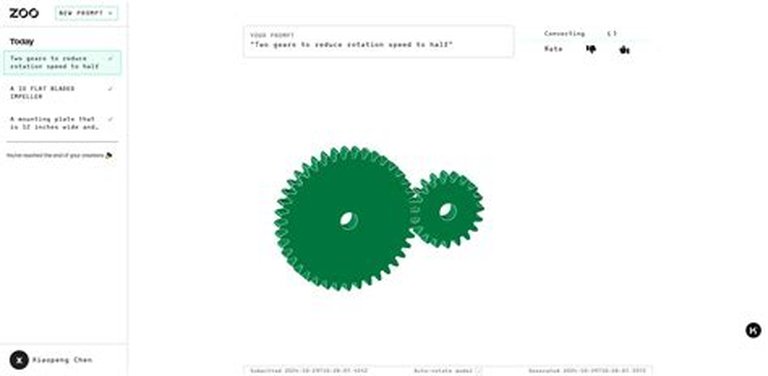
Zoo.dev positions itself as the "Stripe for hardware design"—abstracting geometric modeling complexity into the KittyCAD Design API. This matters because legacy kernels (Parasolid, ACIS) were never architected for AI workloads or web-scale parallelism.
What makes it different:
- GPU-native geometry engine — Boolean intersections, ray casting, and lattice generation run across thousands of GPU cores simultaneously, enabling AI models to evaluate thousands of design variants in seconds
- B-Rep output — Unlike mesh-based AI art tools, Zoo generates mathematically precise Boundary Representation geometry ready for CNC machining and injection molding
- WebRTC streaming — Heavy computation runs on cloud GPUs; results stream to any browser with low latency
- Text-to-CAD via ML-ephant — Their ML suite understands CAD feature trees, not just pixel shapes. Typing "flange with 50mm diameter and 6 bolt holes" constructs actual parametric geometry
Pricing model: Consumption-based at ~$0.0083/second of GPU compute (1 Zookeeper Credit = 1 second). Free tier provides ~1,205 seconds/month. No seat licenses.
Security: Private Tenant model allows enterprise customers to fine-tune Text-to-CAD on proprietary data in isolated environments with zero-retention guarantees.
The Zoo Workflow Philosophy
Zoo advocates AI as the "starter," not the "finisher." An engineer uses a text prompt to generate base geometry (saving 20-30 minutes of initial sketching), then refines with traditional tools or code. For a shorter buyer-oriented view of these tools, see the Best AI CAD Software in 2026 roundup. This acknowledges a core 2026 reality: AI is probabilistic, engineering is deterministic.
AdamCAD: Browser-Based AI for Makers and Prototypers
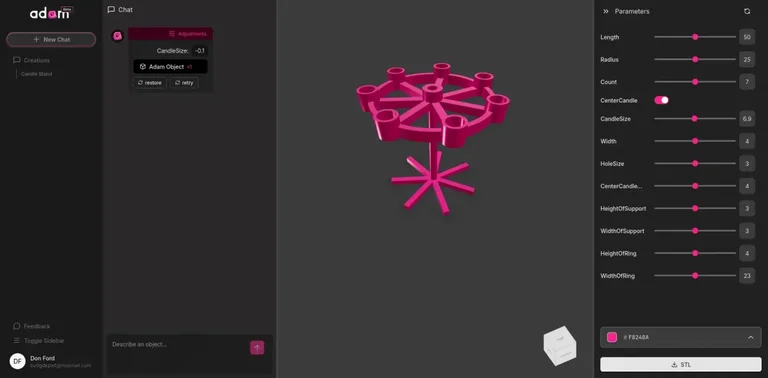
AdamCAD targets the maker and rapid-prototyping community with a "Canva for 3D modeling" approach. It runs entirely in the browser—no workstation required.
Key capabilities:
- Conversational interface — Describe parts in natural language through a chat window
- Instant Refinement — After generation, the AI exposes parametric sliders (teeth count, diameter, thickness) for real-time tweaking without re-prompting
- Image-to-Object — Upload a photo of a broken part to get a 3D starting point for replacement printing
- CAD Companion plugins — Integrates with Fusion 360, SolidWorks, and Onshape as a sidecar tool
Honest assessment: Hobbyists praise it for simple objects (brackets, cases, enclosures). Professional engineers report it lacks "design intent" for precision components—a gear might look right but miss proper involute curve geometry. Best used for prototyping, not production.
Leo AI: The Engineering Knowledge Copilot
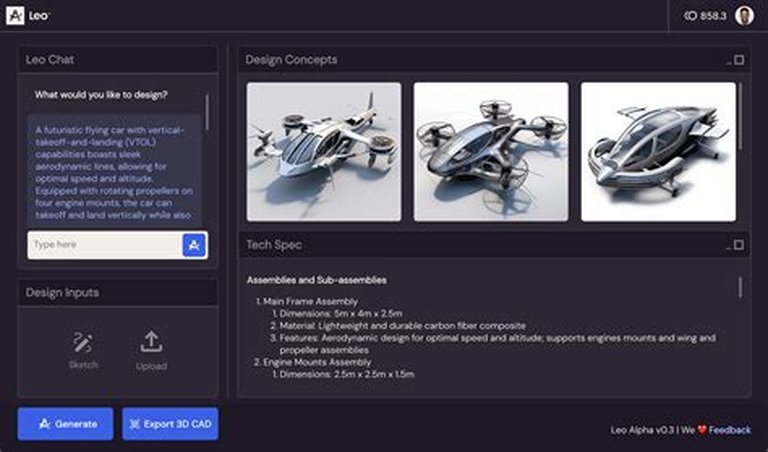
Leo AI solves a different problem than geometry generation: it tackles engineering cognition. Its thesis is that the hardest part of modern engineering isn't drawing the line—it's knowing where to draw it.
The Large Mechanical Model (LMM):
Unlike generic LLMs, Leo's proprietary model is trained on millions of engineering papers, ISO/ANSI standards, and vendor catalogs. Key applications:
- Legacy knowledge retrieval — "Show me all bracket designs from the 2022 satellite project supporting over 5kg" retrieves actual CAD files from your PLM system
- Component sourcing — Describe requirements ("stepper motor, 5Nm holding torque, fits 40mm cube") and Leo searches 120M+ vendor parts, checks stock, downloads CAD models
- BOM automation — Transforms Bill of Materials creation from manual data entry to automated review
Pricing: Pro at $39/month; Business/Enterprise at $1,800/year with PLM integration. ROI math: saving a $150/hr senior engineer 15 hours/year pays for itself.
DraftAid and Swapp: Automating the Documentation Bottleneck
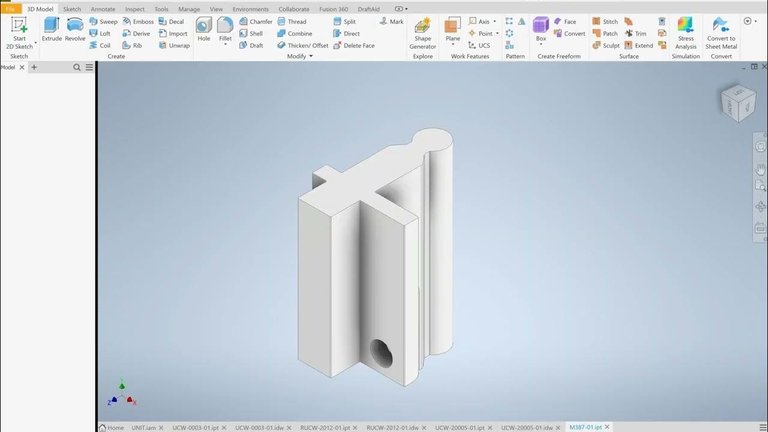
Despite decades of "paperless" promises, 2D drawings remain the legal currency of manufacturing in 2026. They define tolerances, surface finishes, and inspection criteria. Creating them is universally the most tedious part of engineering.
DraftAid: Mechanical Drawing Automation
DraftAid integrates into SolidWorks and Autodesk Inventor, claiming 90% reduction in drafting time. Its critical innovation: style learning. The AI trains on your existing drawings to replicate your company's specific dimensioning conventions (ordinate vs. baseline, note placement, title block format).
ROI example: A firm generating 300 drawings/month saves ~112 hours of labor, roughly $8,400/month at $75/hr loaded rate.
Swapp: Architecture Documentation
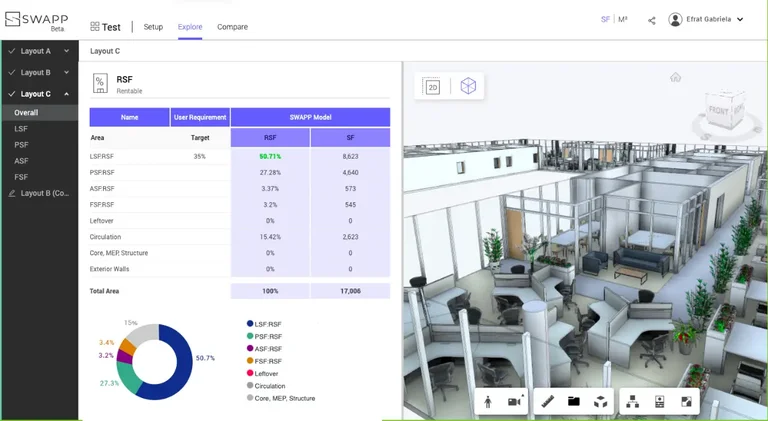
Swapp targets AEC (Architecture, Engineering, Construction). Feed it a BIM model; it outputs full construction documentation—floor plans, elevations, reflected ceiling plans, schedules. In architecture, documentation time often runs 5x design time. Swapp aims to flip that ratio.
The Physics Layer: PhysicsX and nTopology
PhysicsX: Real-Time Simulation via AI Inference
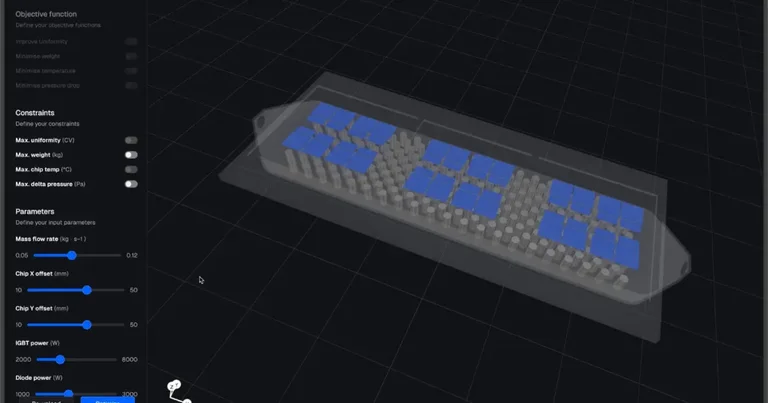
Traditional CFD/FEA validation is excruciatingly slow—overnight batch processes for single design variants. PhysicsX replaces the solver with an inference model.
- LGM-Aero — Foundation model trained on 25M+ 3D shapes with associated physics performance. Drag a slider on a wing shape; see drag coefficient change in real-time
- Simulation Workbench — Uses traditional solvers to generate clean training data for the AI, bridging trusted legacy tools with faster inference
- Design space exploration — Test thousands of variants in the time it previously took to test one
nTopology: Implicit Modeling Meets Machine Learning
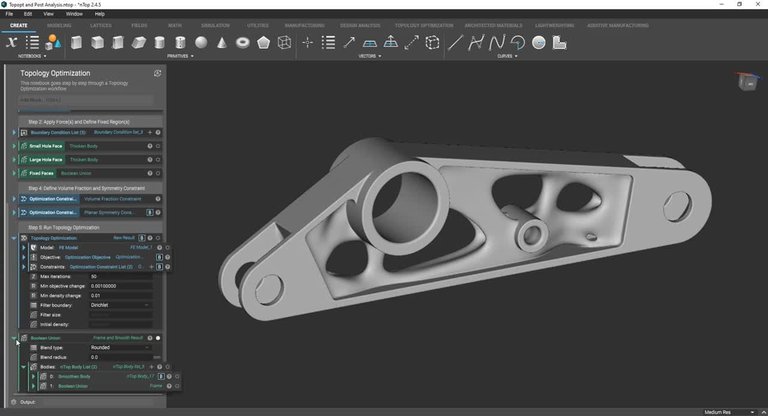
nTop uses mathematical fields (not B-Rep or mesh) to define geometry, enabling incredibly complex structures—gyroids, lattices, heat exchangers—that are mathematically lightweight. In 2025/2026, nTop integrated ML directly into optimization loops: geometry "grows" or "densifies" in response to simulated stress and heat fields in real-time. Essential for additive manufacturing where complexity is free but validation is expensive.
How Legacy Giants Are Responding
SolidWorks 2026: The Aura AI Assistant
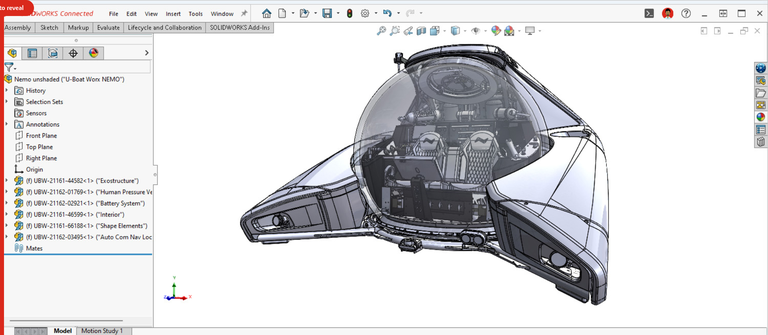
SolidWorks 2026's centerpiece is Aura—deeply integrated into the 3DEXPERIENCE platform. It guides complex workflows, summarizes team design changes, retrieves tribal knowledge, and includes AI agents for fastener recognition and drawing automation. The re-strengthened "Unplanned Offline Mode" acknowledges that cloud connectivity isn't guaranteed in industrial environments.
Autodesk Fusion: Manufacturing-Aware Generative Design
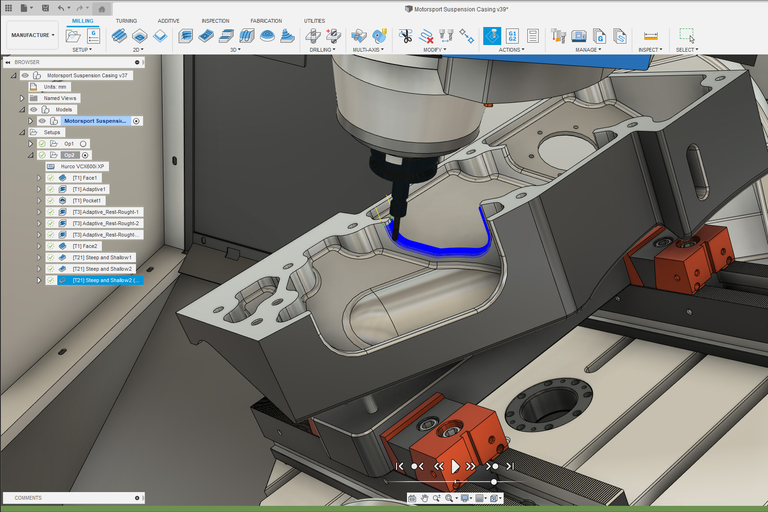
Fusion's generative algorithms now understand manufacturing constraints deeply—suggesting shapes optimized specifically for 5-axis milling versus casting. This "Manufacturing Awareness" reduces friction from screen to machine.
Siemens NX and PTC Creo
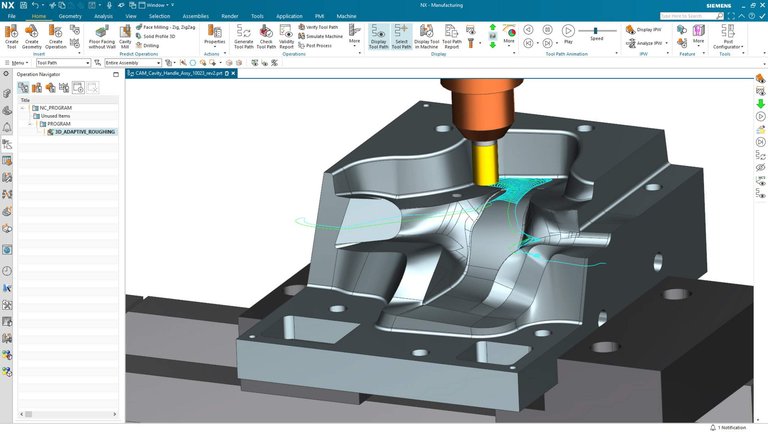
- Siemens NX — AI Chat Copilot focuses on predictive UI, learning user patterns to predict next operations and reduce clicks
- PTC Creo 11 — Generative Design for Additive with constraints for minimum feature size and bearing load support
The Critical Technical Divide: Mesh vs. B-Rep
This is the most important distinction when evaluating AI CAD tools:
| Geometry Type | What It Is | Can You Edit Parameters? | Manufacturing Ready? |
|---|---|---|---|
| Mesh (Polygonal) | Collection of triangles approximating a shape | No — "dumb" geometry | No — requires conversion |
| B-Rep (Boundary Representation) | Mathematically precise surfaces and curves | Yes — fully parametric | Yes — direct to CNC/mold |
Many "AI 3D" tools from 2023-2024 generate only meshes—fine for gaming, useless for manufacturing. Zoo.dev and AdamCAD generating native B-Rep is their primary moat against generic AI image generators.
Security and Risk: What Engineers Must Know
IP leakage concern: If you upload classified designs to a cloud AI for optimization, could the model memorize and reproduce your geometry?
Current mitigations: - SOC 2 and GDPR compliance across major platforms - Zero-retention inference (stateless processing—AI sees the file momentarily, then forgets) - Private tenant deployments (Zoo, Leo AI) with siloed model training
The hallucination risk: In text, a hallucination is amusing. In engineering, it's a structural failure. If AI "hallucinates" a material property, consequences could be catastrophic.
Solution: Deterministic validation. AI tools in 2026 are paired with physics checkers (Ansys, Nastran). AI generates; physics engines validate. PhysicsX builds this loop directly into their Simulation Workbench.
FAQ
Is AI replacing CAD engineers in 2026?
No. 2026 marks the "Hybrid Workflow" as industry standard—AI handles probabilistic generation (geometry, documentation), humans handle deterministic validation (physics, manufacturability). The engineer's role shifts from drafter to conductor of algorithms.
What's the difference between text-to-3D art tools and AI CAD software?
Art tools (like Midjourney 3D) generate meshes—polygonal approximations useless for manufacturing. AI CAD tools (Zoo.dev, AdamCAD) generate B-Rep geometry with mathematical precision suitable for CNC machining and injection molding.
Can I use AI CAD tools with my existing SolidWorks/Fusion workflow?
Yes. AdamCAD offers companion plugins for Fusion 360, SolidWorks, and Onshape. Leo AI integrates with PLM systems. SolidWorks 2026 and Fusion have native AI features built in.
How much does AI CAD software cost?
Ranges widely: Zoo.dev uses consumption pricing (~$0.0083/second with a free tier), AdamCAD has a freemium model, Leo AI charges $39/month (Pro) to $1,800/year (Enterprise), and legacy tools bundle AI into existing subscriptions.
Is my intellectual property safe with cloud AI CAD tools?
Leading platforms offer zero-retention policies, SOC 2 compliance, and private tenant deployments. Zoo.dev's Private Tenant model trains on your data in isolation. However, sensitive defense/aerospace work should verify compliance with ITAR and specific regulatory requirements.
What's the best free AI CAD tool to try first?
AdamCAD's free tier is the most accessible for beginners (browser-based, no install). Zoo.dev's free tier (~$10/month in credits) suits developers who want API access. Both generate real B-Rep geometry, not just visual meshes.